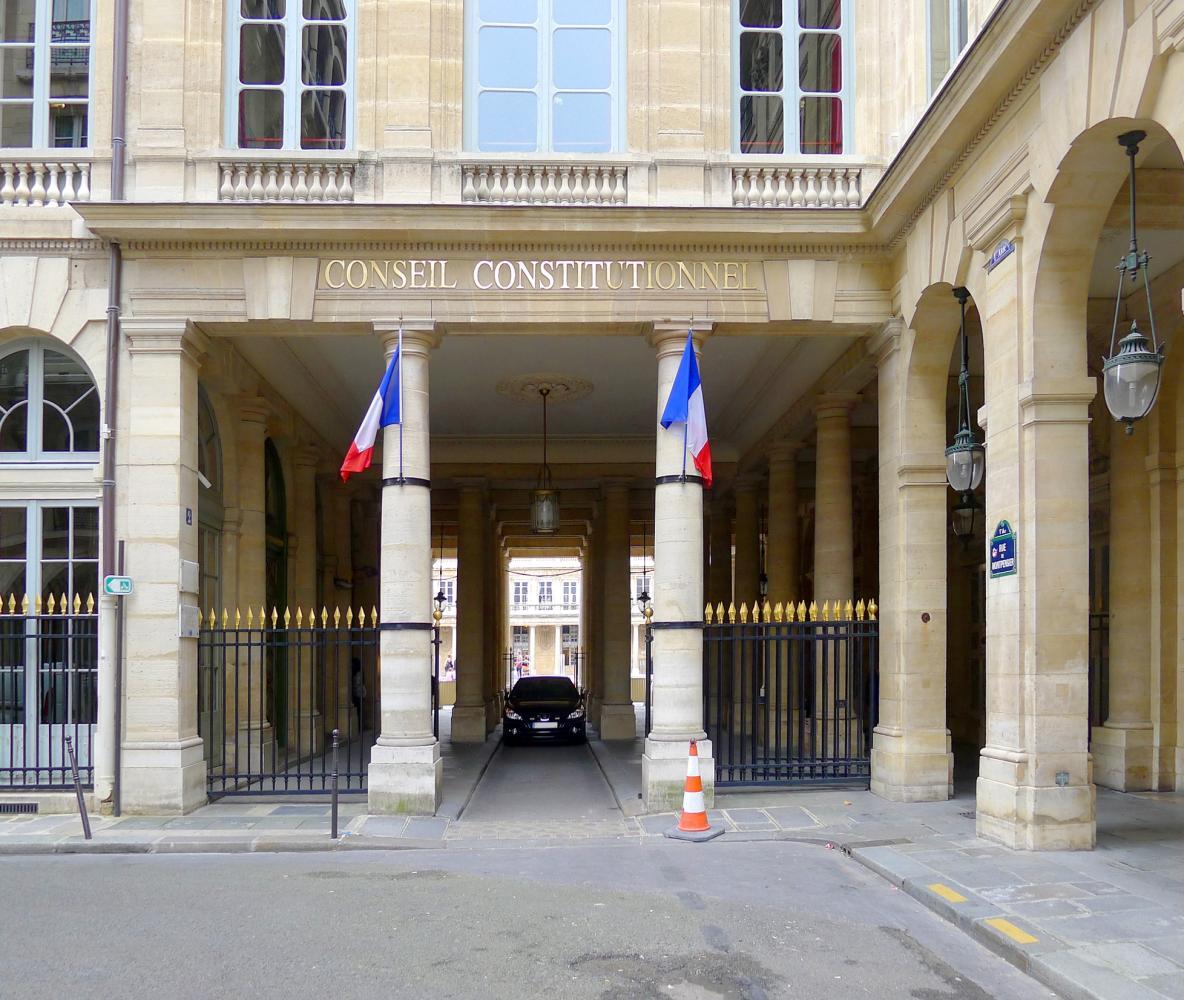
The publication in 2025 of the archives of the Constitutional Council on the European Charter for Regional or Minority Languages reveals a debate from 1999 largely dominated by political fears, prejudices, and a lack of understanding of linguistic realities. In an analysis signed by the lawyer Véronique Bertile and the sociolinguist Philippe Blanchet, the foundations of this historic decision are severely questioned.
A Document Long Inaccessible
The Constitutional Council has made public the minutes of its session on June 15, 1999, dedicated to the European Charter for Regional or Minority Languages. This 49-page document sheds light on the conditions under which France blocked the ratification of this Council of Europe treaty, which was nonetheless signed by France.
For Véronique Bertile, a legal expert at the University of Bordeaux, and Philippe Blanchet, a sociolinguist at the University of Haute-Bretagne (Rennes 2), this publication is damning. According to them, the decision of the Constitutional Council appears less as a rigorous legal analysis than as the result of a debate dominated by personal beliefs, political fears, and a Jacobin ideological vision of national unity.
“This long report leaves legal experts stunned: no legal arguments, but personal convictions, impressions, ignorance, and prejudices. Worse: at the end of his legal analysis, the rapporteur concluded that the Charter was constitutional, but since the opposing opinions based on personal beliefs were in the majority, the decision concluded that the Charter was unconstitutional.” — Véronique Bertile and Philippe Blanchet
A Charter Initially Judged Compatible
The most striking point is that the rapporteur of the Constitutional Council, Georges Abadie, initially concluded that the Charter was compatible with the Constitution. His analysis aligned with that of constitutionalist Guy Carcassonne, who believed that France could ratify a significant part of the Charter without undermining its constitutional principles.
The Charter did not aim to create collective rights for separate communities but to protect and promote historical languages. It left states with considerable freedom in choosing the commitments undertaken. France had also adopted a very cautious version, close to the minimum required. Despite this, the Constitutional Council ultimately concluded that the text was unconstitutional.
The Fear of Communitarianism
The analysis by Bertile and Blanchet shows that several members of the Council reasoned from a fear of "communitarianism," equating regional languages with a threat to national unity. This fear appears all the more questionable since the Charter explicitly excluded the languages of migrants and concerned only the languages historically present in the territories of the states. Nevertheless, some councilors mention Arabic, Berber, or even Algeria, introducing comparisons unrelated to the actual content of the text.
The authors also remind us that the idea that the ordinance of Villers-Cotterêts imposed French in all official acts largely falls within the realm of national myth. Historically, this ordinance only concerned acts of justice and aimed to make them understandable in the languages of the people involved (not solely in French).
A Political Decision More Than a Legal One
For Bertile and Blanchet, the report reveals a fundamentally political decision. Several advisors do not merely examine the compliance of the Charter with the Constitution: they seek to prevent any potential future developments in French society, particularly regarding the recognition of regional languages. The Constitutional Council refuses to recognize a right to use a language other than French in the public sphere and rejects any territorial recognition of these languages. According to them, this is incompatible with the indivisibility of the Republic.
A similar question arises today in Corsica, where projects aim to associate the Corsican language with its territory within the framework of an autonomy status. Will the Constitutional Council declare such a status unconstitutional? Probably not, as a constitutional revision is currently under discussion to allow for such developments.
A Debate Still Relevant
Twenty-five years after the 1999 decision, the question remains open. Article 75-1 of the Constitution now recognizes that "regional languages belong to the heritage of France," but this recognition remains largely symbolic.
The publication of the archives of the Constitutional Council thus provides new insight: the French blockage on the Charter of regional languages does not really rest on legal reasoning, but rather on a rigid conception of the Republic mixed with a sense of superiority of the French language.
For the defenders of Breton, Basque, Corsican, Alsatian, as well as other regional languages—from Picard to Franco-Provençal—and the languages of overseas territories, these archives confirm what they have long denounced: in France, regional languages face discrimination and prejudice.
Sources and Authors
This text is based on an analysis initially published on a Mediapart blog and later taken up and summarized by Mediabask. The official report of the session of June 15, 1999, is available on the Constitutional Council's website
Philippe Blanchet is a sociolinguist, a professor at the University of Haute-Bretagne (University Rennes 2), specializing in language policies and minoritized languages.
Véronique Bertile is a lawyer, a lecturer at the University of Bordeaux, specializing in public law and constitutional law.



evezhiadennoù (0)
Evezhiadenn ebet c'hoazh. Bezit ar re gentañ o reiñ ho soñj !