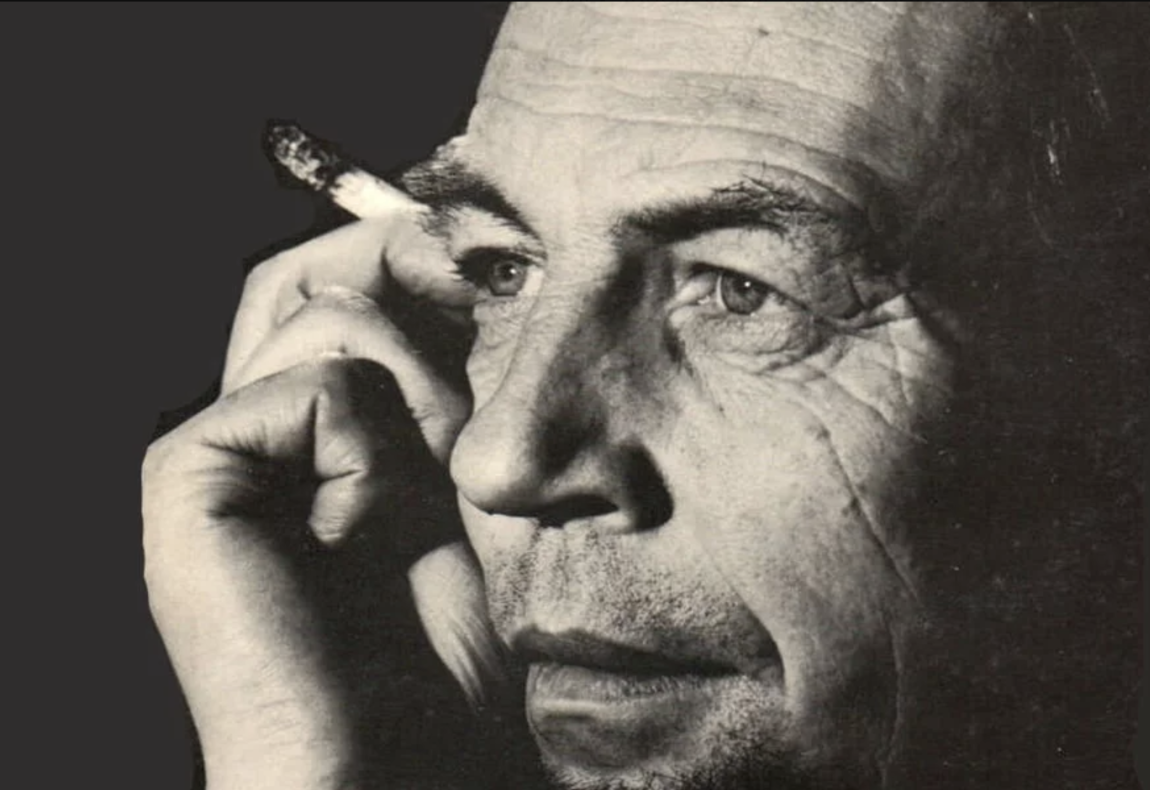
Hommage à Glenmor
Réalisation : ABP – 547 vues
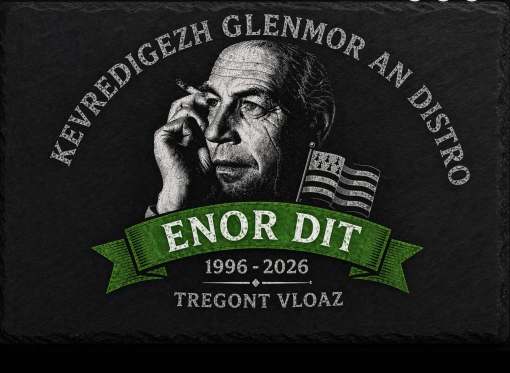
Thirty years after the passing of Glenmor (1931-1996), the association Glenmor an Distro gathered on Saturday in Maël-Carhaix several relatives, admirers, and companions of the singer to unveil a new plaque on his grave. Among those present were his daughter Sterenn Le Scañv and the writer Louis Bertholom.
Songs by the great bard were sung such as Groñvel, Ô Keltia, Kan Bale an ARB. Some of his poems were read by Sterenn Le Scañv. Gwenn Ar Born sang his composition "Milig Disuj." The gwenn-ha-du that covered the plaque was removed by the president of the Glenmor an Distro association. A plaque had already been placed by the association on the occasion of its 25th anniversary, but it had been unscrewed and stolen.
Glenmor was a bohemian, solid as a three-hundred-year-old oak, "I was born three times a bard in a citadel," spitting his sap into the paths, into the carrying winds with a priestly conscience that led him as a true tribune to help a people no longer resign themselves. He was a stubborn jester, a visionary who aimed to "de-brotellize" an anesthetized and caricatured nation while reconnecting with ancestral myths at the bedside of the passions and revolts of our time.
— Louis Bertholom
Glenmor "de-brotellized" Brittany
Louis Bertholom read an excerpt from the preface of his book Nous te souvenons Glenmor, reissued for the occasion. The text refers to Théodore Botrel, whose folklorized and caricatured image of Brittany long dominated the French imagination alongside that of Bécassine. Through his songs, writings, and positions, Glenmor contributed, on the contrary, to giving the Bretons a political, historical, and cultural consciousness. Long before Alan Stivell, Glenmor was the precursor of the awakening of the Breton nation.
Also on Glenmor
On June 16 starting at 6 PM, poets Louis Bertholom and Pierre Tanguy will discuss the bards Glenmor and Youenn Gwernig on the first floor of the pub Le Ceili in Quimper, on the occasion of the 30th anniversary of the former's death and the 20th anniversary of the latter's.



evezhiadennoù (0)
Evezhiadenn ebet c'hoazh. Bezit ar re gentañ o reiñ ho soñj !